
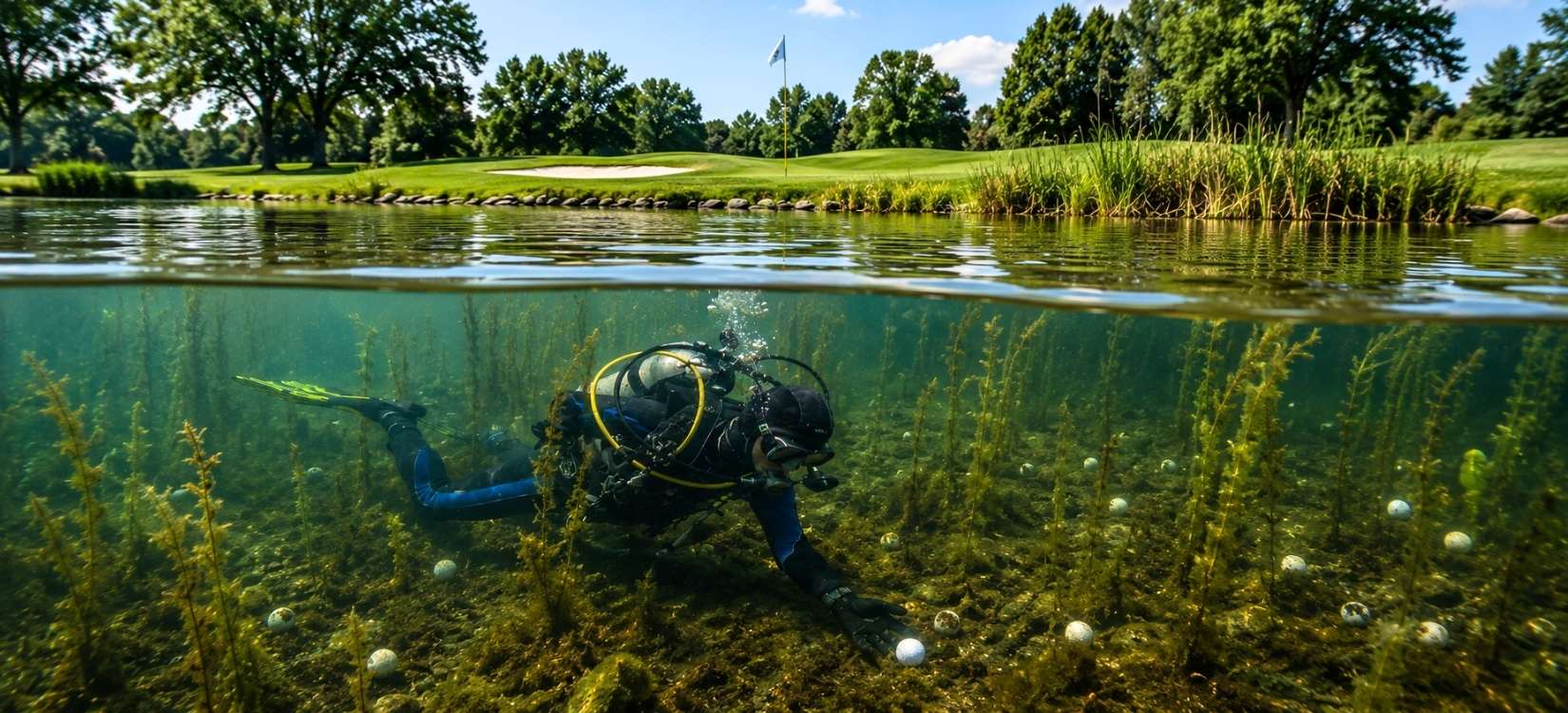
Diving for Golf Balls: Why Recreational Divers Should Stay Out of the Pond
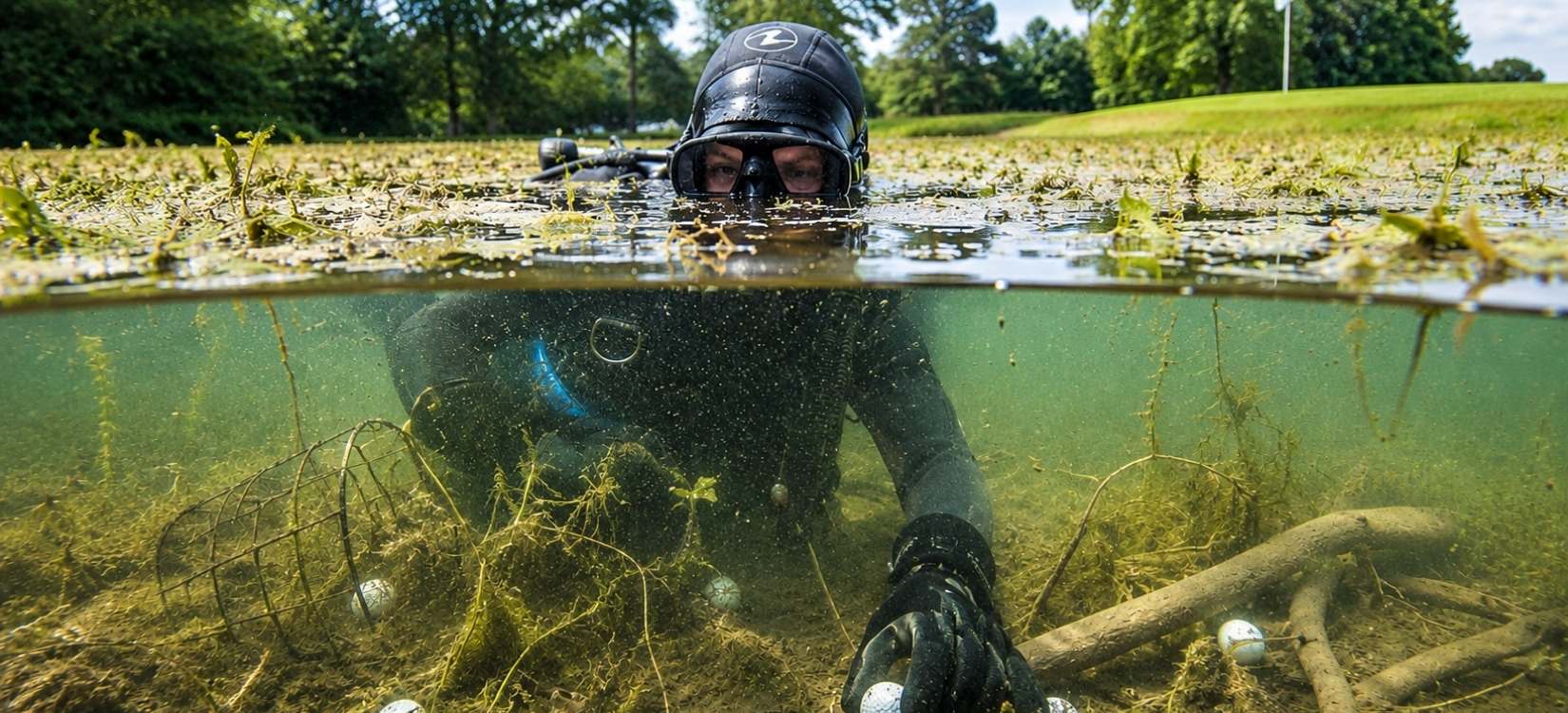
Every diver has heard the stories: “There’s money to be made pulling golf balls out of water hazards.” On the surface, it sounds quirky—even adventurous. After all, who wouldn’t be intrigued by the idea of treasure hunting just a few feet below the surface, pulling up lost golf balls by the hundreds?
But make no mistake: golf ball recovery is not recreational diving. It is commercial diving, and it comes with dangers that recreational divers are not prepared for.
Before you’re tempted to toss on a tank and jump into a golf course pond, let’s dive into the truth about what this activity really is, why it’s so dangerous, and what it actually takes to do it safely.
A Brief Background: The Golf Ball Diving Industry
Golfers lose millions of balls every year. Some estimates suggest that hundreds of millions of golf balls end up in water hazards worldwide. Naturally, this created a market: companies began retrieving, cleaning, and recycling those balls for resale.
Professional golf ball divers emerged to meet the demand. These aren’t weekend hobbyists—they’re trained commercial divers who treat the work as a business. Contracts are negotiated with golf courses, safety protocols are followed, and recovered balls are sold by the truckload.
Unfortunately, the quirky nature of this job sometimes lures recreational divers who see it as an easy side hustle. That’s where the danger begins.
What Kind of Diving Is Golf Ball Recovery?
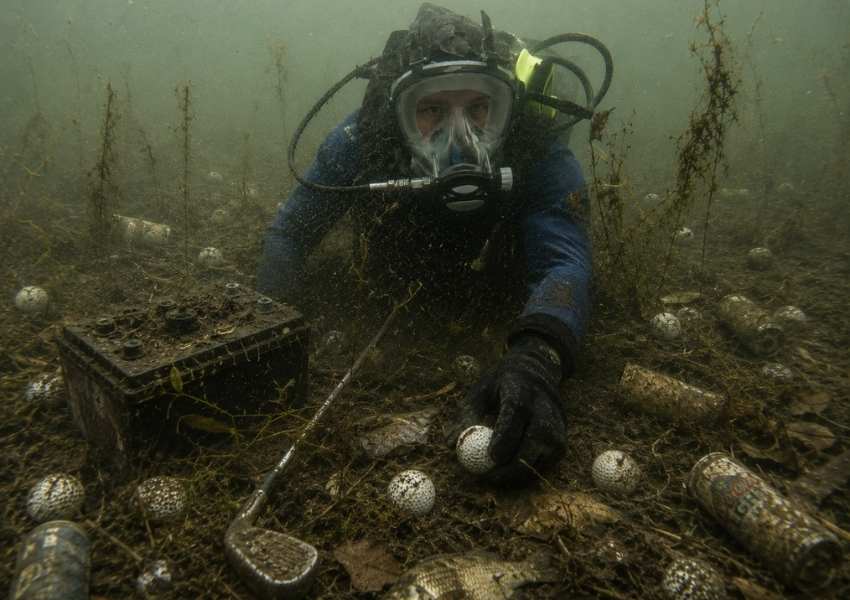
Golf ball recovery is hard, unforgiving work, and under the worst diving conditions. It falls under inland commercial diving—the same category as hull cleaning, construction diving, and underwater welding. It is work for pay, in an environment that is inherently unsafe without professional training and equipment.
By contrast, recreational scuba certifications (Open Water, Advanced Open Water, Rescue Diver, etc.) prepare divers for non-commercial, no-decompression, buddy-based exploration in relatively safe environments. The difference is night and day.
In short: diving for golf balls is not an “extension” of recreational diving—it is an entirely different discipline.
Why It’s Dangerous
Golf ball diving carries a unique cocktail of hazards. Let’s break them down:
1. Zero Visibility
Imagine dropping into a pond where the visibility is not just poor—it’s nonexistent. You can’t see your gauges, your buddy, or even your own hand in front of your face. Divers often work entirely by touch, crawling along the bottom to collect balls.
2. Entrapment Hazards
Golf ponds are cluttered with weeds, roots, fishing line, and discarded junk. Getting tangled is easy, and in zero visibility, disentangling yourself becomes a nightmare. A snag that would be minor in clear water can spiral into panic when you’re blind.
3. Contaminated Water
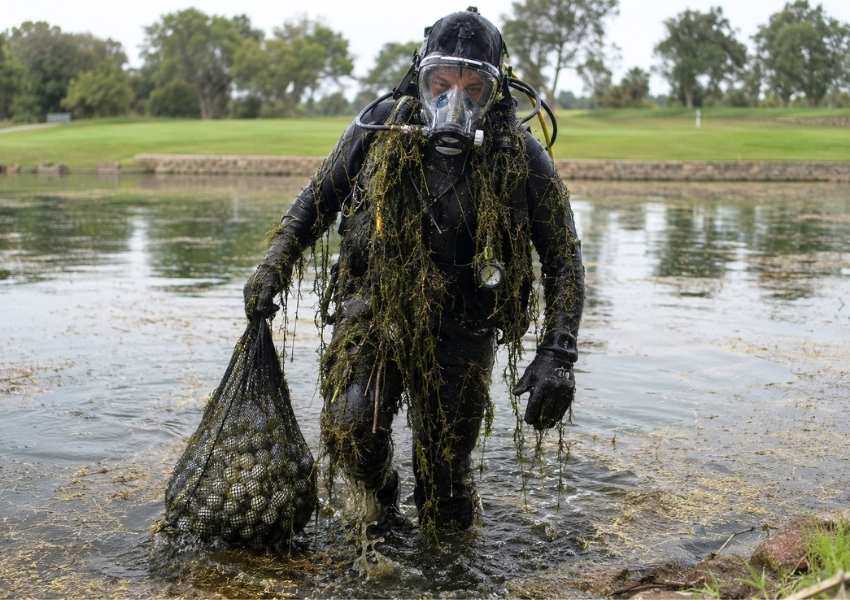
Golf courses rely heavily on fertilizers, herbicides, and pesticides. Those chemicals wash directly into the ponds, creating a toxic soup. Add algae blooms, bacteria, and animal waste, and you have water that can cause rashes, infections, and even systemic illness from a small cut. Divers sometimes report skin burns and respiratory issues after exposure.
4. Disorientation and Stress
With no visual reference, divers can quickly lose track of direction, depth, and time. Stress levels spike as the brain struggles to compensate. This leads to higher air consumption and a greater risk of out-of-air emergencies.
5. Wildlife Hazards
Depending on location, golf ponds can harbor leeches, bears, moose, and cougars. These animals may feel threatened by a diver blundering through their space, and encounters can end badly.
6. Physical Demands
Golf ball recovery is not a gentle dive. Divers crawl across the bottom, feeling for balls, filling heavy bags, and hauling them to the surface. The work is strenuous and increases the risk of exhaustion, CO2 buildup, and mistakes.
Put all of these together, and you have an environment that is far more dangerous than anything recreational scuba prepares you for.
Why Recreational Divers Aren’t Qualified
Let’s be crystal clear: no recreational diving certification qualifies you to dive in golf ponds.
Recreational training emphasizes:
It does not cover:
A recreational diver jumping into a golf pond is like a weekend hiker attempting Mount Everest without training or guides. Confidence and enthusiasm don’t substitute for qualification.
What It Takes to Be Qualified
Professional golf ball divers approach the job with the mindset and preparation of commercial divers. To do this work safely requires:
This isn’t optional. It’s the standard.
The Reality of Golf Ball Diving
No one who’s tempted by “easy money diving for golf balls” (it’s not easy money – it’s hard, demanding work) is going to spend tens of thousands of dollars and months at a commercial diving academy.
The reality is: there’s no shortcut to making golf ball diving “safe” for recreational divers, because it’s commercial diving work, period. But let’s break this down into two perspectives:
1. The Hard Truth
Golf ball diving looks like a side hustle, but in reality, it sits in a grey zone:
If someone really wants to be a professional golf ball diver, the only fully safe and legal path is through commercial diver training. Anything less is cutting corners on safety.
If recreational divers want to do it to make some quick cash... they may end up in a quick grave.
2. The “Reality Prep” Approach
Now, if we’re being practical—and speaking to the diver who’s going to do it anyway—what could they do to at least reduce risk? Here are the steps that would mitigate danger, though they don’t replace true commercial training:
Skills to Develop
Equipment Upgrades
Support Systems
3. The “Professional Mindset” Shift
Even without a commercial diving ticket, anyone serious about golf ball diving needs to treat it as work, not play. That means:
Legal and Liability Issues
Even if you survive a golf pond dive, you may face legal consequences.
What seems like a harmless adventure and easy money could easily spiral into legal trouble.
Real-World Consequences
Sadly, there have been fatalities. Divers have drowned in golf ponds after becoming entangled, disoriented, or incapacitated by contaminated water. Some were experienced recreational divers who thought their skills would carry them through.
Experience helps in many areas of diving—but experience without training in this specific environment is not enough. The hazards are different, and the margin for error is razor-thin.
Moving Forward
If someone asks, “How do I become a safe professional golf ball diver without commercial school?” the most honest answer is:
You can reduce the risk with gear, training, and preparation, but you’ll never make it as safe or as legitimate as commercial divers do. The decision becomes: either go all-in with proper commercial training, or accept that you’re taking on significant risks that can’t be eliminated.
So, resist the temptation. Stay out of the ponds. It’s not as easy as it sounds, and it’s much, much harder than you think. Stick to the places where scuba delivers what it was meant to: discovery, growth, and enjoyment.
Dive Smart, Dive Safe